
The Lord of Hidden Knowledge: A Look at the Life of Anton LaVey
In this article, I argue that the Lord of Hidden Knowledge in the chart of Anton LaVey is Venus, and that his life, religion, rituals, and philosophy are a direct expression of Venus operating through hidden, occult, and ritualized forms.
This conclusion is derived from applying a technique taught by Dr. Olomi, which identifies the ruling planet behind hidden knowledge through a synthesis of multiple testimonies. When applied to LaVey’s chart, the results are not only consistent, but striking in how closely they mirror his lived experience and philosophical framework.
Prior to this, my understanding of LaVey was surface level. I knew he founded the Church of Satan, but I had not explored his life or beliefs in depth. Through this research, I came to see that while his views may appear extreme or unsettling to some, they are nevertheless coherent and rooted in a clear philosophical structure.
What follows is a breakdown of this approach and how it reveals Venus as the governing force behind LaVey’s engagement with ritual, desire, and hidden knowledge.
When discussing the Lord of Hidden Knowledge, Dr. Olomi describes it as knowledge from the unseen, or al-ghayb, the realm of angels. In the Gospel of Matthew, Jesus Christ says:
“To you it has been given to know the mysteries of the kingdom of heaven, but to them it has not been given.”
And in a later verse:
“Blessed are your eyes, for they see, and your ears, for they hear.”
Two things stand out here. First, the kingdom of heaven is described as a mystery. Second, those who are able to perceive it are considered blessed. This is not the only instance in which Jesus speaks in a way that requires interpretation. His teachings consistently draw from the unseen, often referencing the Father, who is not visible, and affirming that they are Echad, the Hebrew word for one.
Hidden knowledge, from an astrological standpoint, is not simply intelligence or education. It is tied to the ninth house as the place of religion, divination, and higher meaning, to Mercury as the interpreter and transmitter of symbolic language, and to those things that originate beyond what is immediately visible. What is brought forth from the unseen is often taken literally when it is not meant to be. This type of knowledge is symbolic, layered, and occult in nature.
In my view, hidden knowledge is not something we simply learn and record. It is something that is embodied. The inner reflects the outer, and the outer reflects the inner, until the two become one. At times, this may not make sense, nor does it need to.
This brings us back to Anton LaVey. The life he lived and the legacy he left behind were marked by mystery and rebellion. He stood in direct opposition to societal norms and carved out a path that moved deliberately toward what most would consider the opposite of what is accepted.
Out of respect for Dr. Olomi’s work, I will not explain the technique in full here. Instead, I will provide a general overview of how I arrived at the conclusion that Venus is the Lord of Hidden Knowledge in LaVey’s chart.
I approached this analysis through a synthesis of traditional indicators related to knowledge, divination, and the unseen. This includes factors tied to the ninth house, Mercury and its condition, and the rulers associated with wisdom and religious understanding. Rather than relying on a single placement, this method considers multiple points within the chart and looks for a consistent pattern that emerges across them.
The focus is not on any one factor in isolation, but on repetition and coherence. By observing which planet continues to assert itself across these different layers, a clear pattern begins to form of what governs hidden knowledge in the chart. In this case, that planet is Venus.
If Venus is the Lord of Hidden Knowledge, then hidden knowledge itself must take on Venusian qualities.
VENUS
Across the sources, a consistent pattern emerges in the significations of Venus. Whether we look to Hellenistic authors, medieval Arabic astrologers, or later traditional writers, Venus is repeatedly associated with pleasure, beauty, love, desire, joy, sex, and a distinct emphasis on refinement and cleanliness, often expressed through ritualized or aesthetic acts.
Venus is described as a planet of pleasures and joys, tied to music, laughter, amusement, and the enjoyment of life’s sensory experiences. This is not passive enjoyment, but an active seeking of delight, as she “rejoices with everything and seeks everything and is eager for it.” There is a clear orientation toward indulgence, whether through art, sound, fragrance, or physical experience.
At the same time, Venus governs beauty and adornment. She is linked to clothing, ornaments, gold, silver, perfumes, and the careful arrangement of appearances. This extends beyond surface-level beauty into the crafting and shaping of environments, including decorated spaces, ceremonial settings, and even houses of worship. There is an aesthetic intelligence here, one that brings harmony and attraction through form, color, and design.
Closely tied to this is Venus’s rulership over love, affection, and relational bonds. She signifies friendship, companionship, attraction, and emotional connection, often accompanied by sweetness of speech and a desire for unity with others. Yet this same current extends into sexuality and lust, where Venus is consistently associated with fornication, sensual pleasure, and the pursuit of physical intimacy in its many forms. The tradition does not separate love from desire. Both are expressions of the same underlying principle.
Another important and often overlooked theme is Venus’s connection to cleanliness, refinement, and ritualized action. She is described as clean, orderly, and involved in the arrangement of ceremonies, particularly weddings and other formalized gatherings. This includes the use of fragrances, garments, and symbolic objects, all of which elevate ordinary acts into something more deliberate and meaningful. Even in religious contexts, Venus is linked to devotion, prayer spaces, and the maintenance of ritual forms.
Taken together, these significations point to a unified pattern. Venus is not merely about love or pleasure in isolation. She represents a principle of embodied experience, where desire, beauty, and enjoyment are expressed through tangible forms, often elevated through ritual, adornment, and intentional practice. Pleasure is shaped, beauty is constructed, and desire is enacted.
This is the consistent thread across the tradition. Venus seeks, enjoys, adorns, unites, and indulges, while simultaneously refining those experiences into something aesthetic, symbolic, and, at times, ritualized.
Venus in LaVey’s Chart
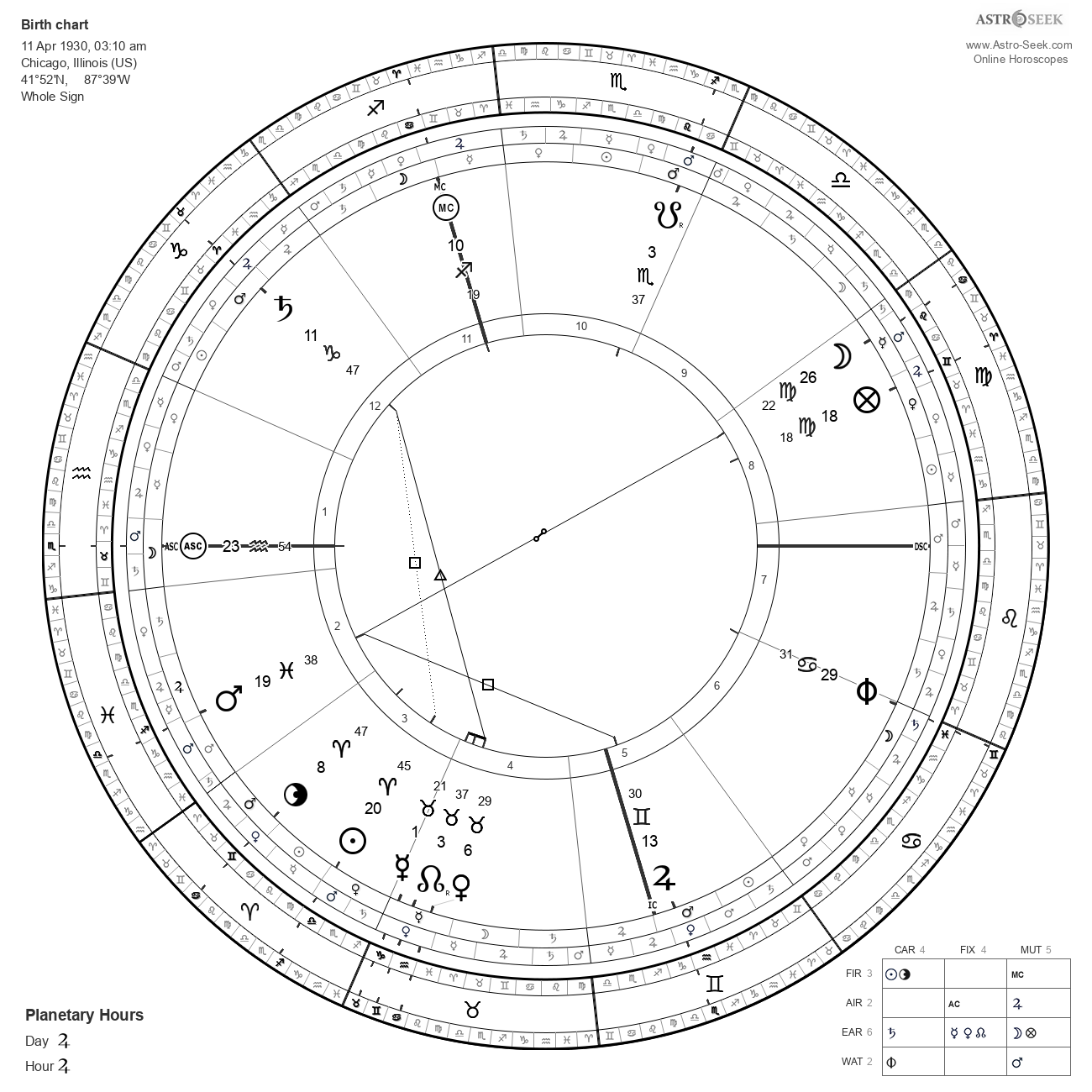
In LaVey’s chart, Venus is in her fixed nocturnal domicile, Taurus, in the fourth house. She rules the ninth house in Libra, which is associated with religion and philosophy and is also connected to the joy of the Sun and the unseen. She is placed in one of the most obscured or hidden parts of the chart, commonly referred to as the “Stake of the Earth.”
Right off the bat, we see a clear symbolic meaning for Venus in the chart. Venus is also conjunct Rahu, the Head of the Dragon, better known as the North Node, which amplifies and intensifies Venusian desires.
Venus is occidental, meaning she rises and sets after the Sun, aligning with her sect. In addition, Mercury is co-present with Venus, further reinforcing the significations expressed through LaVey’s chart.
Venus is applying a trine aspect to Saturn, who is in the superior position. Saturn is also in his own domicile in the eleventh house, the house of Good Daimon. This shows Saturn giving Venus structure, discipline, and form. Because Saturn is in the superior position, Venus expresses herself on Saturn’s terms. He sets the conditions under which her significations are carried out. Saturn does not suppress Venus here, he disciplines and stabilizes her expression. Rather than restricting Venus, the trine allows her desires to operate in a structured and deliberate way, especially as they relate to the material experience.
The Life of Anton LaVey
Astro.com gives LaVey’s chart an AA rating, which indicates a high level of reliability. While I am not an expert on LaVey or the full intricacies of his religion, we know that he was an author, musician, and Satanist who founded the Church of Satan in 1966.
As noted in his biography, “As a child of seven he studied the supernatural, moving into black magic by high school. He was a high school dropout who spent time in pool halls. Musically gifted, he became the second oboist in the San Francisco Ballet Orchestra at 16.”
There are many aspects of his life that stand out, but the ones that matter most here are tied to his religion, particularly his rituals and core ideas. Based on the research I conducted, several key themes stand out:
Ritualized Desire
In LaVey’s system, desire isn’t random or unconscious. It’s intentional, directed, and ritualized. This reflects Venus as the force of attraction and pleasure, operating through the Lord of Hidden Knowledge as a way of working directly with desire itself.
Aesthetic and Theatrical Ritual
His ceremonies were highly visual and sensory, with robes, altars, lighting, and a controlled atmosphere. This is Venus through and through. Beauty, adornment, and presentation shaping hidden knowledge into something staged and immersive.
Sex as Operative Power
Sexual symbolism and acts, especially in rituals like the Lust Ritual, point directly to Venus as a generative force. Through the Lord of Hidden Knowledge, sexuality isn’t just about pleasure, it becomes a tool for manifestation and intention.
Indulgence as Philosophy
His doctrine of indulgence over abstinence reflects Venus in her excessive expression. Pleasure, gratification, and sensory experience are not secondary. They become the guiding principles at the core of his entire system.
Structured and Enduring Practice
Through Saturn shaping Venus, his ideas weren’t fleeting. He created an organizedreligion with structure, hierarchy, and repeatable rituals. This is Venus given form, turning hidden knowledge into something lasting instead of temporary.
Even with all of this evidence that lines up so well with LaVey’s religion and occult framework, I still felt like something was missing. I couldn’t fully wrap my mind around why this Venus showed up in this way. I mean, I get it. It’s in the fourth house, it rules the ninth, but it’s not a debilitated or afflicted Venus. If anything, it gave LaVey a legacy strong enough to be remembered, a religion and a church that still stand today even after his passing. So I began to ask myself, what else in this chart points to this drive, this satirical desire rooted in lust and self-indulgence?
After all, the focus of this article is the Lord of Hidden Knowledge, and I realized it wasn’t going to be something obvious sitting right in front of me.
So I turned to the fixed stars. I’m not a fixed star expert by any means, and I’ve only recently started exploring this area, but what I found was astonishing.
His Venus is conjunct the fixed star Hamal. Based on the resources I found, this star is located in the constellation of Aries at the base of the horn of the ram. This is the missing piece. This star is often described as having a Mars-Saturn nature, almost as if the two malefics combined and had a baby. As the head of the ram, Hamal represents the instinct to charge forward, raw, primal initiative, and action driven by impulse and desire.
Venus conjunct Hamal in LaVey’s chart is what pushes this Venus beyond simple pleasure and into something active and driven. Venus on her own attracts, but with Hamal, desire is pursued, asserted, and acted on without hesitation. This is indulgence showing up as intentional, forceful engagement with pleasure, ritual, and experience. It explains why his system doesn’t just revolve around desire, but actively pushes it forward, turning it into something structured, confrontational, and fully embodied.
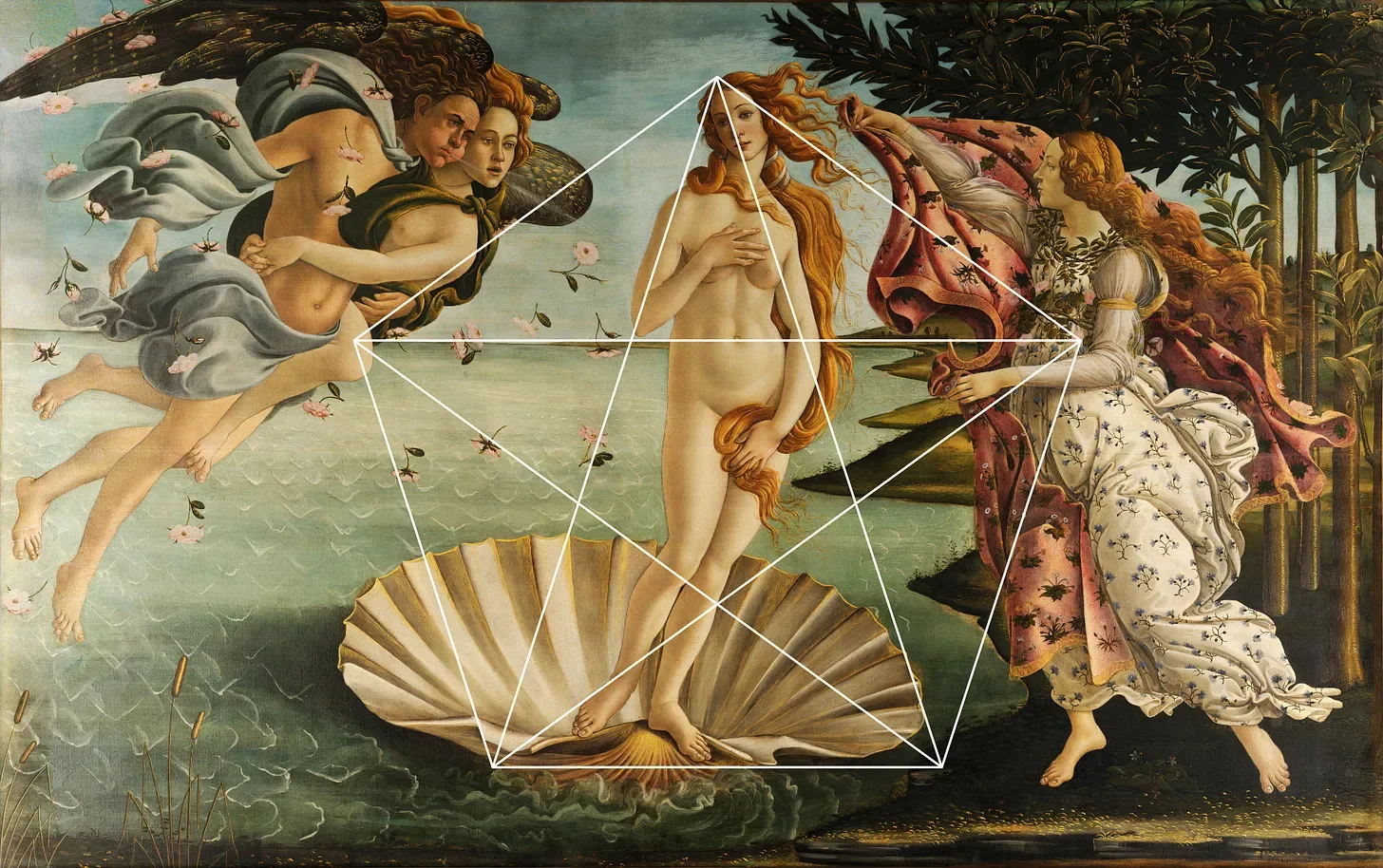
The other thing that is one of the staples in LaVey’s legacy is the inverted pentagram. If you are familiar with the eight-year cycle of Venus, it is common knowledge among astrologers that she forms a pentagram in the sky. This shows how he inverted or flipped the Venusian attributes. Taking an ancient symbol (Saturn) based on the Venusian cycle. Lilly and several other authors outline the negative expressions of Venus as indulgence without restraint, sexual excess, idleness, vanity, deception, and a tendency toward pleasure that overrides judgment. This inversion is not random. It reflects Venus expressed through excess, desire, and a full immersion into the material experience. This is exactly the current that runs through LaVey’s philosophy, ritual, and overall legacy.
Anton LaVey also released several albums, although not commercial in the traditional sense, that were centered on ritual sound, atmosphere, and sensory immersion. Venus rules music, harmony, and the shaping of emotional experience, and here again we see her operating as the Lord of Hidden Knowledge, using sound and atmosphere as a medium through which desire is felt, shaped, and expressed.
Conclusion
What we see in the chart of Anton LaVey isn’t contradiction but a consistent pattern. Venus, as the Lord of Hidden Knowledge, does not express herself here through softness, harmony, or relational unity. She expresses herself through desire, ritual, aesthetics, and embodied experience, shaped and structured through Saturn and driven forward through her conjunction with Hamal.
LaVey’s legacy is not simply rebellion for its own sake. It is the deliberate construction of a system where desire is ritualized, pleasure is structured, and the material experience becomes the primary field of meaning. This is Venus, not in her balanced form, but in her extreme, embodied, and fully expressed state operating through hidden knowledge.
Quotes or Sayings by LaVey
“I break away from all conventions that do not lead to my earthly success and happiness.”
“I don’t crave companionship. It stands in my way. I live for pleasure. There are few persons who can give me as much pleasure as those acts I perform myself. I would rather create pleasure according to my own whim than be subjected to the whims of others.”
“What good are friends if they can’t do you any good?”
— Anton LaVey
Sources
Benjamin Dykes, The Introduction to Traditional Astrology
William Lilly, Christian Astrology
Vettius Valens, Anthology
Dr. Olomi, “Lord of Hidden Knowledge” (Patreon) Lord of Hidden Knowledge, or psychic, occult, and magical abilities in a natal chart according to Medieval astrologers
Astro.com, chart data for Anton LaVey
